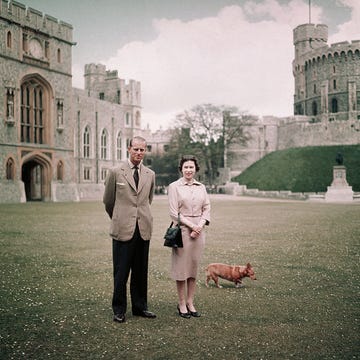
Post offices foster a sense of belonging to the community, acting as an anchor for high streets and villages. According to UK Post Office research, half of UK consumers believe they are vital for our culture, particularly for the elderly or those living in rural areas.
From mobile post services to unique locations, keep reading for some interesting facts you might not know about the post office:
1. The postal system was only for royal use at the start
When Charles I first introduced public mail service in 1635, only the King and the Royal Court could use it. Letters were carried from one 'post' to the next 'post' by carriers on foot or horseback, with some taking over two months to arrive.
According to The Social Historian, there were six main post roads throughout England and Scotland, and the very first 'post office' was set up in Bishopsgate Street in London. The four main post roads ran between London, Dover, Plymouth and Edinburgh, with Bristol and Yarmouth being added by the end of the century.
2. Post offices are run from pubs, cowsheds and churches
From churches to pubs and cowsheds, you'll find post offices in strange locations around the UK. The Bluebell Inn in Halkyn, North Wales, is dealing with post as well as pints, while St James Church in West Hampstead, London, makes space for the congregation to collect parcels — but not on Sunday of course.
Other unusual post office sites include a monastery in Caldey Island, a pet shop in Wragby in Lincolnshire, a tea room in Hatfield Heath, near Bishops Stortford, a barber's in Odiham, and a doctor's surgery in Lancaster.
3. The oldest working post office is in Scotland
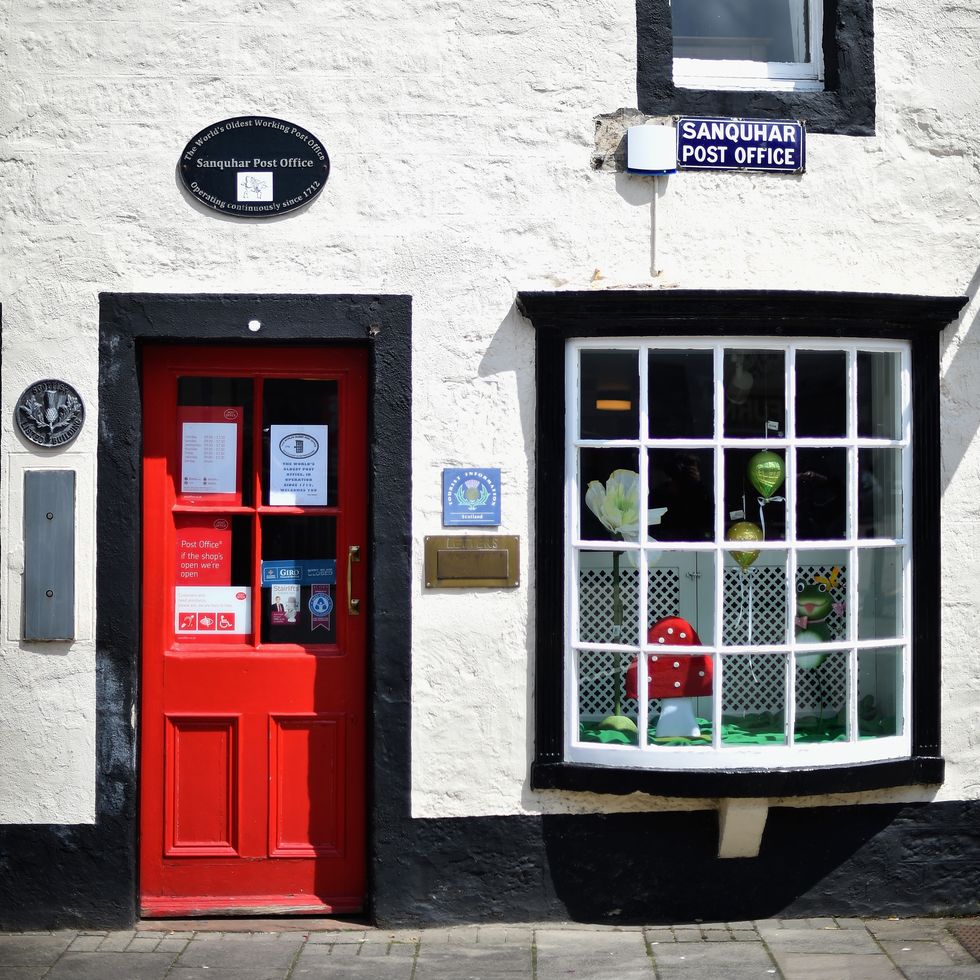
Sanquhar Post Office first opened in 1712 and has been in continuous operation for 311 years, making it the UK's oldest working post office. Located in Sanquhar, a small village situated about 50 miles south of Glasgow in Scotland's Dumfries and Galloway region, it has welcomed 17 owners in 300 years. Its future was at risk after a four-year search for new owners, but Barry and Mary Ford from Florida stepped in as the 17th postmasters in 2023.
"It's important to us to keep it going for the local area, for tourism, and the community," Mary previously told BBC News. "It is a completely different career change for the pair of us – there is a lot of stuff to learn. We don't want it to close if we can keep it going – especially for the local community because so many other branches of banks are closing."
It is a popular attraction for postal and philatelic enthusiasts from across the world. Many visit to have their letters marked with a special handstamp bearing "The World's Oldest Post Office".

4. You'll find them in quaint locations
More than half of the UK's 11,600 post offices are in rural locations, with many of these outlets running from picturesque buildings. Tomich Post Office in Scotland looks like something from the pages of a fairy tale. Meanwhile, on the Isle of Canna in Scotland, the tiny post office is run from a small green shed.
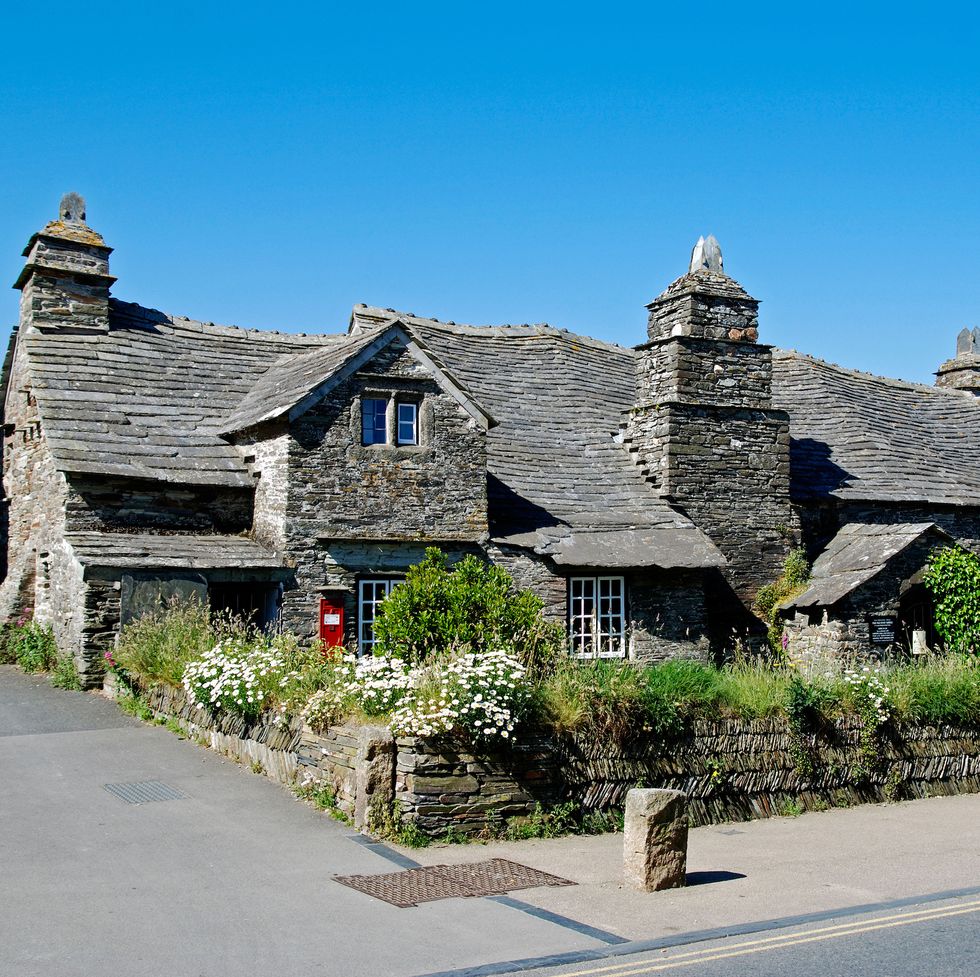
Elsewhere, you'll find Tintagel Old Post Office in Cornwall, now owned by the National Trust. Its life as a post office began in the 19th century when Sir Rowland Hill's introduction of the Penny Postage in 1840 led to the improvement of postal services in remote country places like Tintagel.

5. Many run as coffee shops
Many rural post offices double as tea rooms or cafes, offering postcards, stamps, and a side of scones with clotted cream and jam.
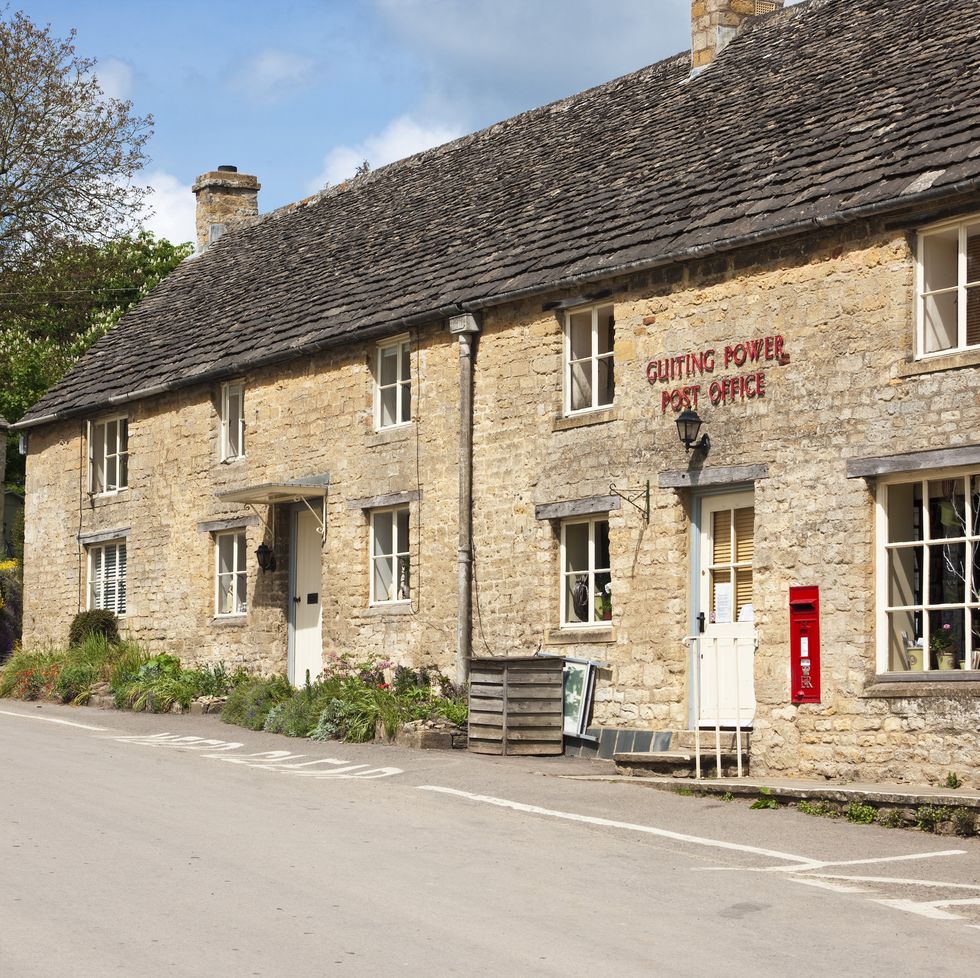
The Old Post Office, in the heart of Guiting Power Village in the Cotswolds, is a charming brunch cafe that serves barista coffee, locally-sourced food and delicious cakes. They also offer a mobile post service.
In Great Glen in Leicestershire, the local post office features a gift shop and a delicatessen, selling freshly made sandwiches, wines and cheeses, and employs 12 staff. "The retail side and the post office work hand in hand. People who haven't been in the shop before will come in to use the post office, see the range we offer and buy something," says owner Sue Parkinson.
"Equally someone might come in to buy a sandwich and they see that the post office is also open at that time of the morning, which is convenient for them."

6. Some are listed buildings
A handful of post offices are in listed buildings, including Cullompton Post Office in Devon, the site in Kent's Wateringbury, and the office in Brighton and Hove.
"Places like this help to make us proud of where we live," Rebecca Barrett from Historic England told BBC News. "Listing recognises their value so they are protected for the future and everyone can continue to enjoy them."
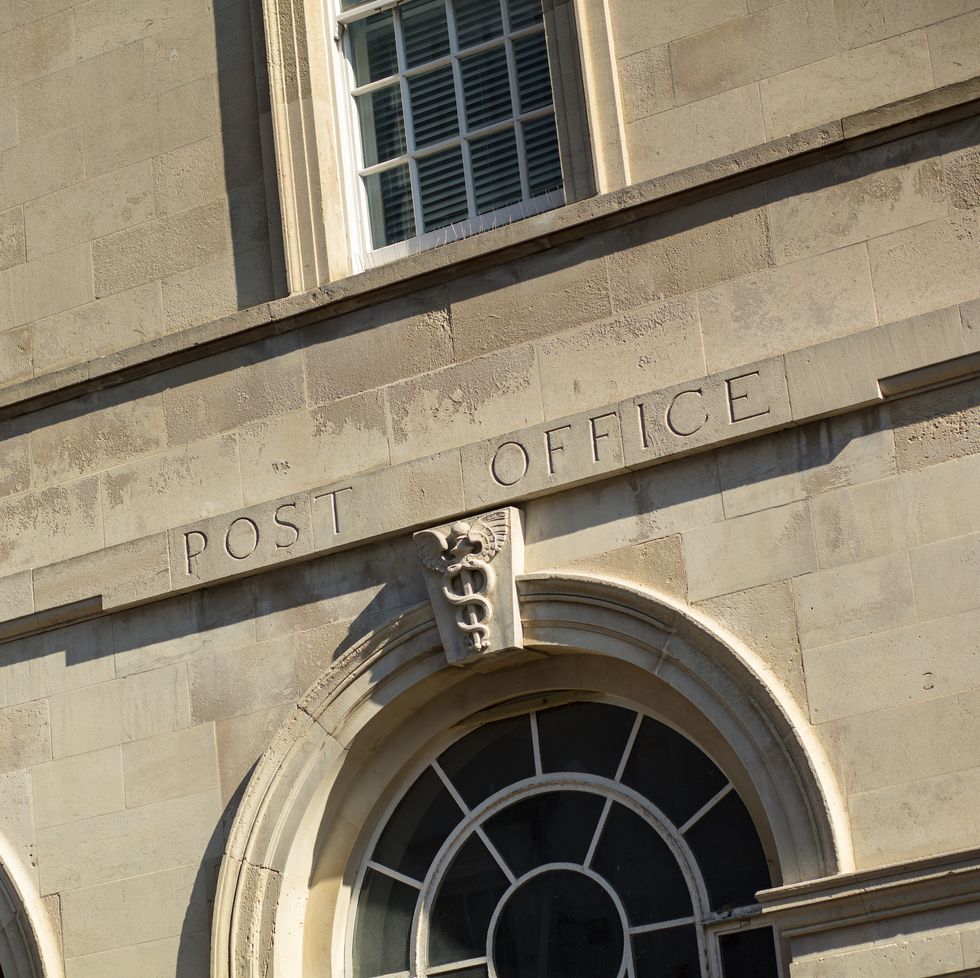

7. They serve rural areas with mobile services
According to previous research, 99% of the rural population is within three miles of their nearest post office, and more than half of the branch network is in rural locations.
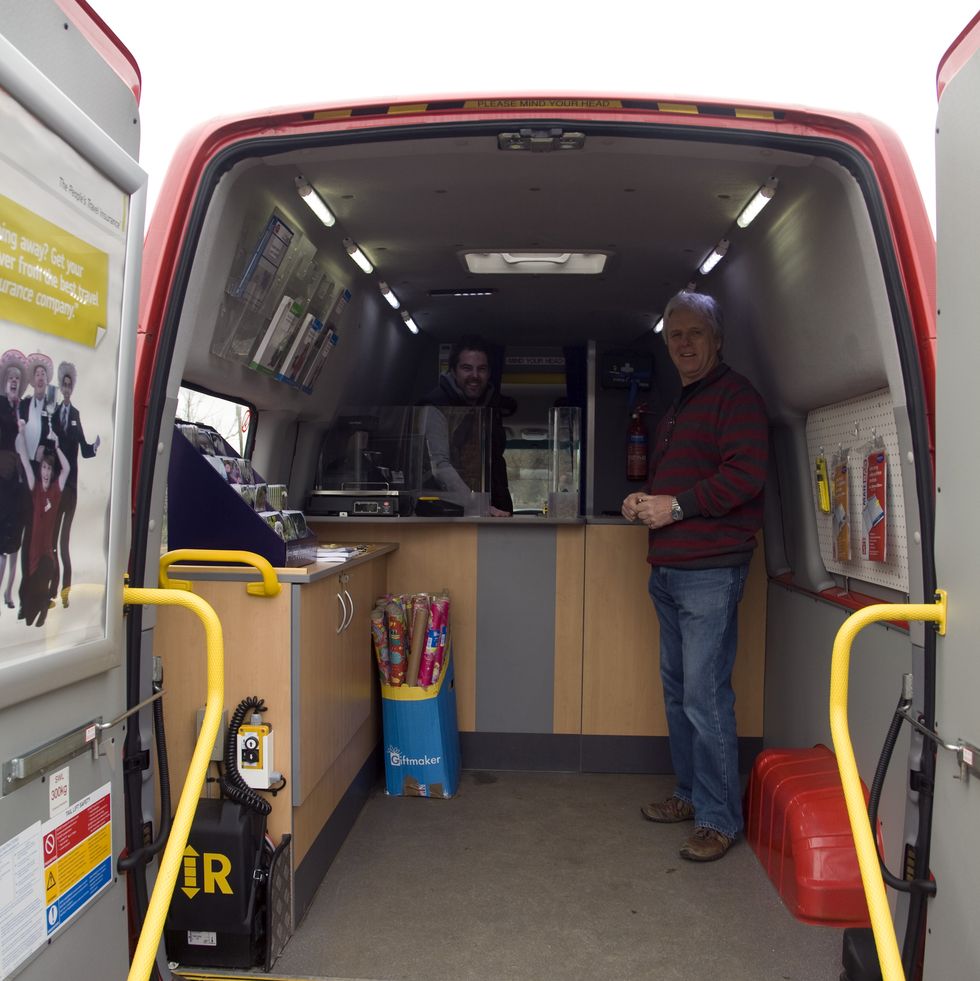
Back in 2014, it was announced that a fleet of mobile post offices was being rolled out to serve 250 rural locations. 40 Mercedes Sprinter vans were converted into walk-in offices on wheels, bringing core services to more isolated areas, including letter/parcel postage, personal banking, cash withdrawal, savings and insurance services.

Small kitchen ideas: Expert design advice for the most compact kitchens
Low ceilings
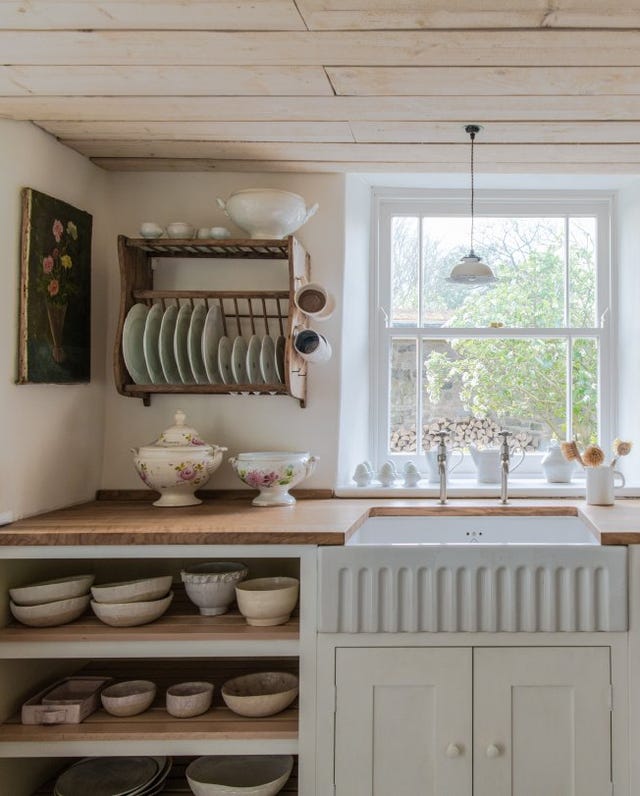
Country cottages often have low ceilings and small windows, especially in the kitchen. There are a few design tricks used in this little nook that make it feel more expansive – the brilliant whites that brighten, the tiny pendant light and miniaturised accessories that suit the scale of the room, and a window left without any dressing to encourage natural light.
Pictured: Bespoke kitchen at Plain English
Freestanding cupboards
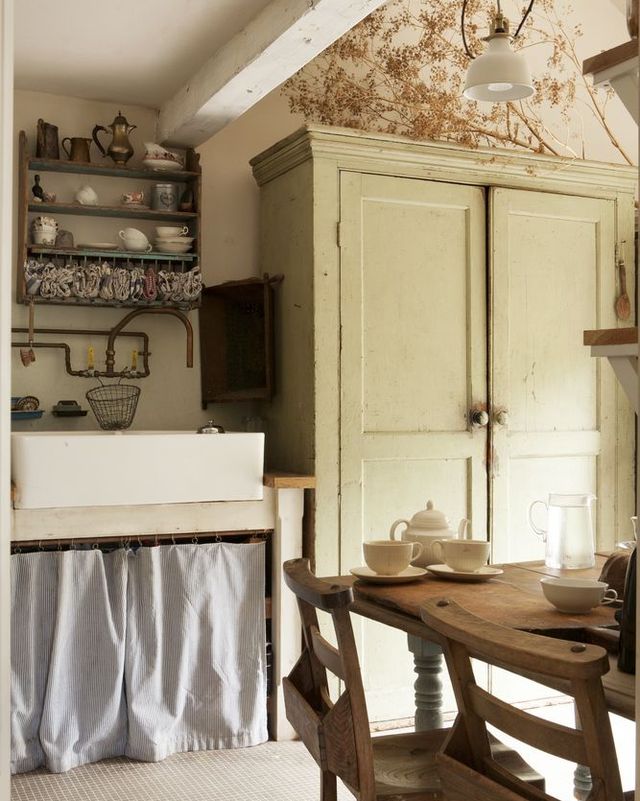
If you have a small kitchen with awkward dimensions, you might have to spend a lot of money on bespoke, integrated storage. But first, try measuring up for a freestanding cupboard, vintage sideboard, or even an antique chest of drawers – the sizes might work well without the extra cost of buying bespoke.

Wall-mounted storage
Wall-mounted storage is another helpful tool in small spaces – overload it with your most attractive pans and utensils to create a little feature unto itself. A lovely butter yellow gives the impression that this kitchen is permanently bathed in sunlight.
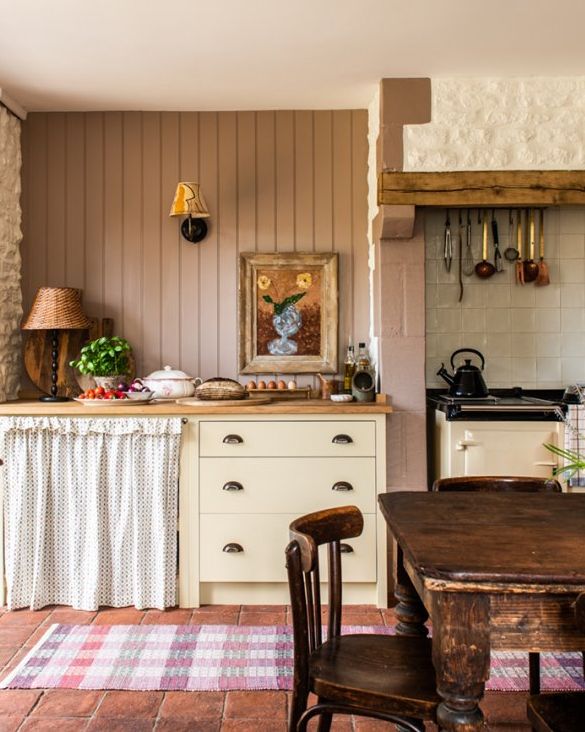
Curtains
Kitchens are becoming a bit kitsch – we've seen classic pantries return, rows of copper pots hanging from rails, and these sweet, ruffled curtains appearing under sinks or units. They have the welcome effect of breaking up a run of cupboards that can feel weighty and imposing in smaller spaces.
Pictured: Bespoke kitchen at Plain English
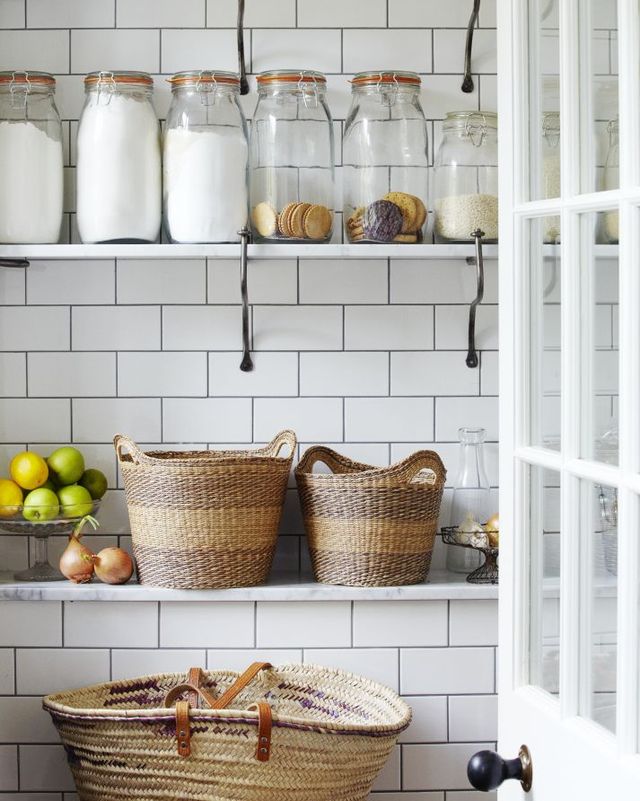
Attractive storage
"No matter how small your kitchen is, there is always a way to utilise the benefits of a purpose-built pantry — you simply need to think vertically," says Al. "By creating a narrow floor-to-ceiling larder and then adding generously spaced vertical shelves, you can maximise the storage space. Jars, bottles, bread machines, vases, cereal boxes — whatever it is, you’ll have plenty of space to play with, and without taking too much of your kitchen space either."

Clever shelving
You can create a whole feature out of simple shelves by using them as an open pantry. The pantry returned as a covetable kitchen design feature around 2020, and since then, we have been collectively feeling our way towards a contemporary interpretation that serves 21st-century needs. This charming example is the handiwork of Laura Stephens – which sits within the footprint of the kitchen, partitioned with internal windows offering an enticing peek inside.
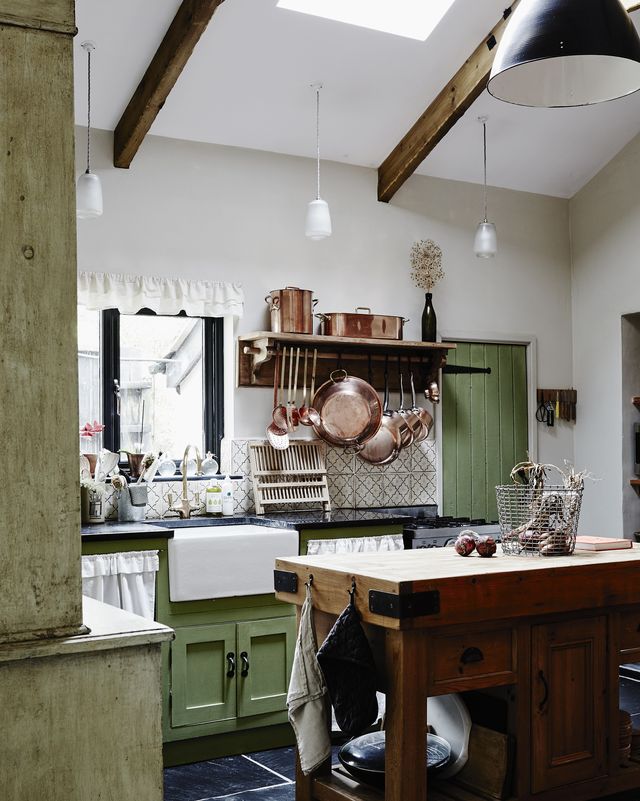
Butcher block
Using a butcher block as a makeshift kitchen island is one of the best solutions for smaller kitchens. You can buy really wonderful antique and reclaimed versions, and they are exceptionally sturdy and hard-wearing for the most demanding family kitchens.

White
"We need our homes to feel that much roomier, lighter, and brighter. White kitchens do this perfectly, offering an energising, transformative aesthetic to any space and making smaller rooms feel bigger," says Tom Howley, Design Director of the eponymous kitchen company. Note too the extra shelving above the kitchen door – a clever space saver for any small room.
You can tour the rest of this Norfolk farmhouse, too.
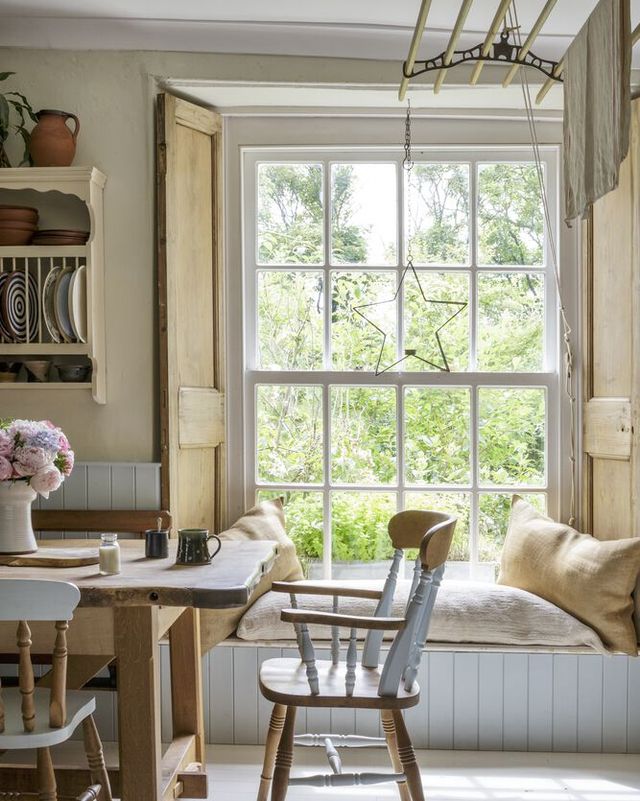
Natural light
Any good source of natural light should be a focal point in a small kitchen. These shutters create a lovely frame, even if they are never used and the seat underneath – softened with cushions rather than any fussy upholstery – makes it all the more functional.

One-wall kitchen
Small kitchens will always require a good deal of planning, but the one-wall kitchen is truly an exercise in ingenuity. This diminutive layout requires a real balance between storage capacity, functionality and flow.
Pictured: Bespoke kitchen at Plain English
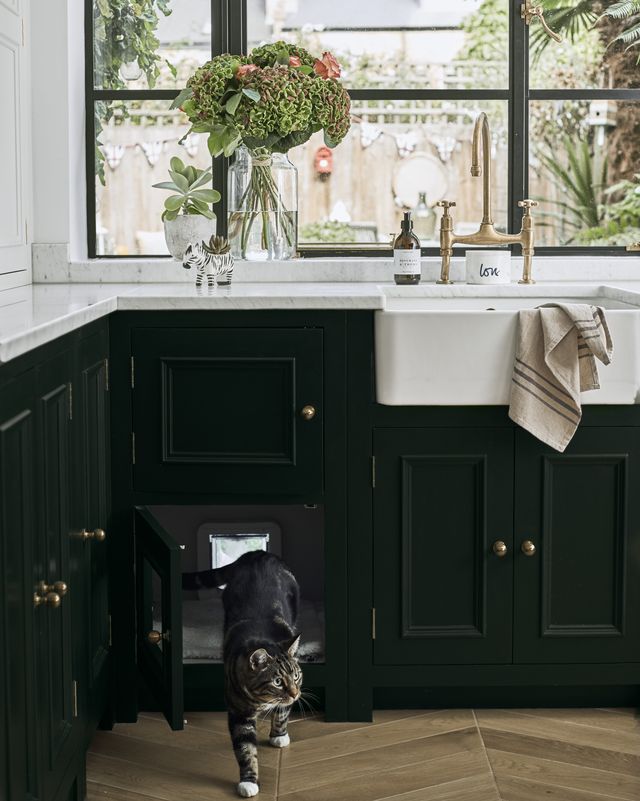
Integrated features
It's sometimes surprising what you can integrate into your kitchen cupboards. We love the hidden cat door here, dog bowls can be set into the base of your cupboards too, and integrating larger appliances like microwaves and coffee machines frees up valuable work surfaces.
Pictured: Bespoke Kitchen at Neptune
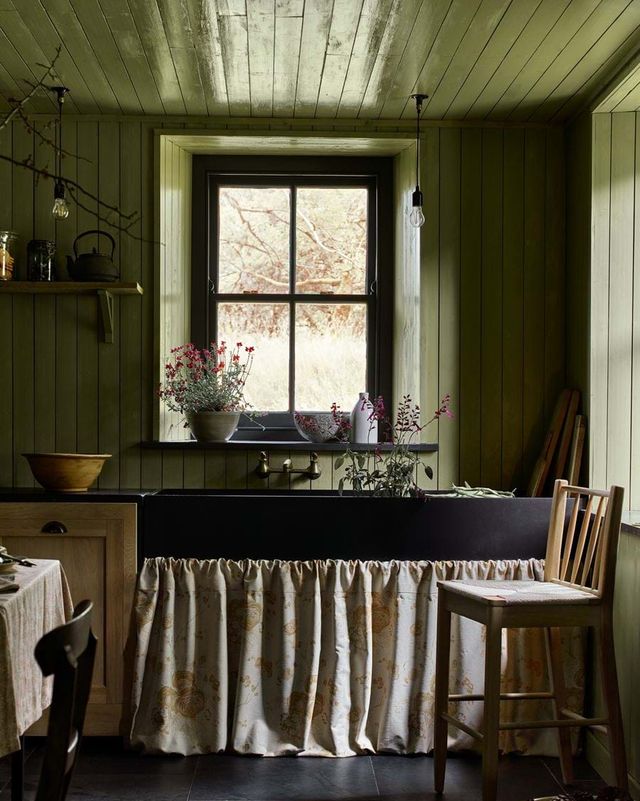
Lacquered surfaces
Any paint with a gloss or eggshell finish will work wonderfully to reflect natural light and make your space feel brighter and more expansive. It won't be suitable for all surfaces – it's a tricky one for walls unless they are clad in wood like this fabulous green Neptune kitchen – but we've seen it used successfully on ceilings, staircases and floors. A lacquer on all your wooden surfaces – doors, bannisters, kitchen cabinets – will work in much the same way.
Pictured: Wycombe Bar Stool at Neptune

Galley kitchens
"Galley kitchens work best when using the full height of the kitchen, so long, slim pantries that allow you to store less-used items on the higher shelves are a great idea," says Tom. A simple narrow bench can become your version of a kitchen island.
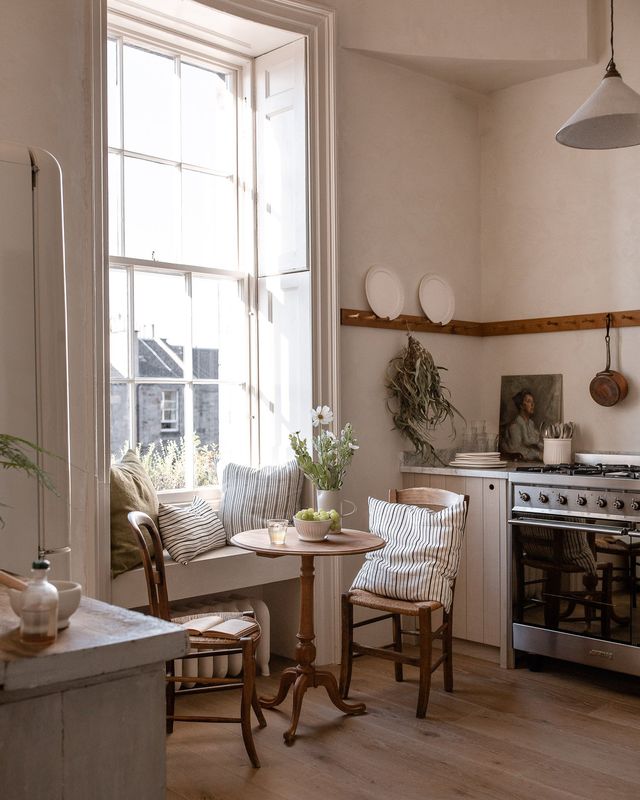
Bistro tables
A dining table will most likely be out of the question in a small kitchen, but an informal breakfast nook with a petite bistro table makes for a great alternative. So too do bar stools tucked under a work surface. It provides a level of informality in the kitchen – not quite as relaxed as a cup of tea and a piece of toast on the sofa, but without the ceremony of a dining room.
Pictured: Bespoke kitchen by deVOL
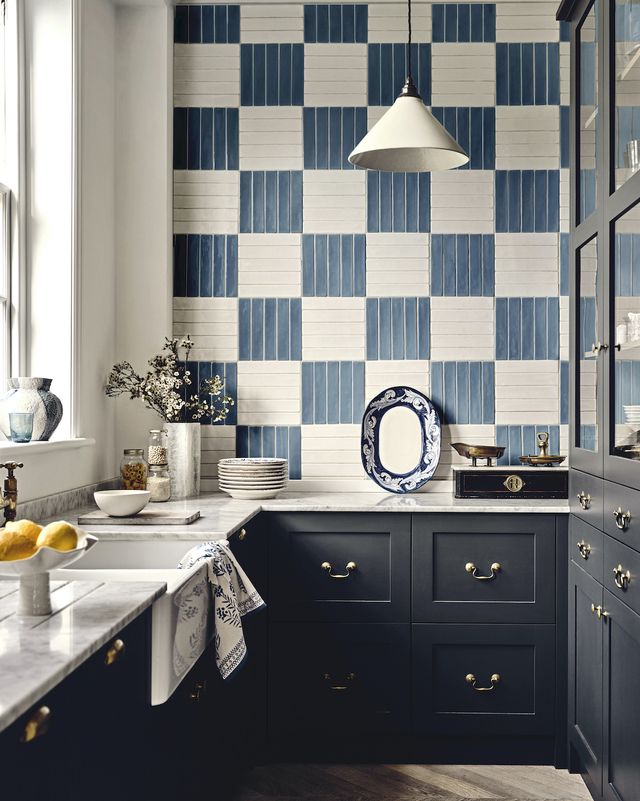
High ceilings
If your kitchen is small in width or length but benefits from high ceilings, they can be emphasised with an impactful feature wall. This can be achieved with a wash of colour, but the most practical solution is a great stretch of tiles that fills the whole wall.
Pictured: Tiles at Fired Earth
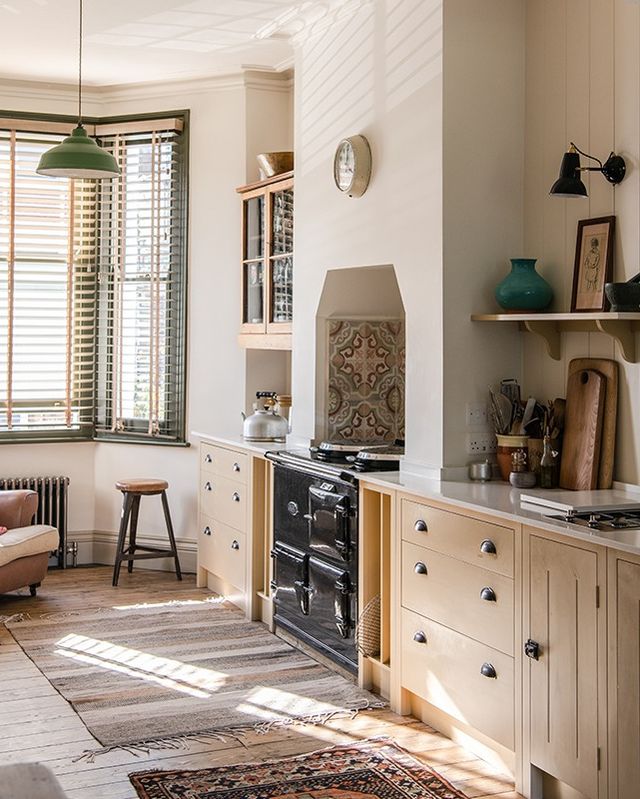
Narrow spaces
"In narrower kitchen spaces, everything can be within arms-length, making it easy for a designer to plot an efficient ‘golden triangle’ of cooker, fridge and sink," says Tom. "Creating a run of cupboards or a bank of appliances is easy in parallel kitchens. This layout is appealing because it’s intimate, functional, easy to work in and can look stunning with beautiful floor-to-ceiling cabinetry."
Pictured: Bespoke kitchen at Plain English
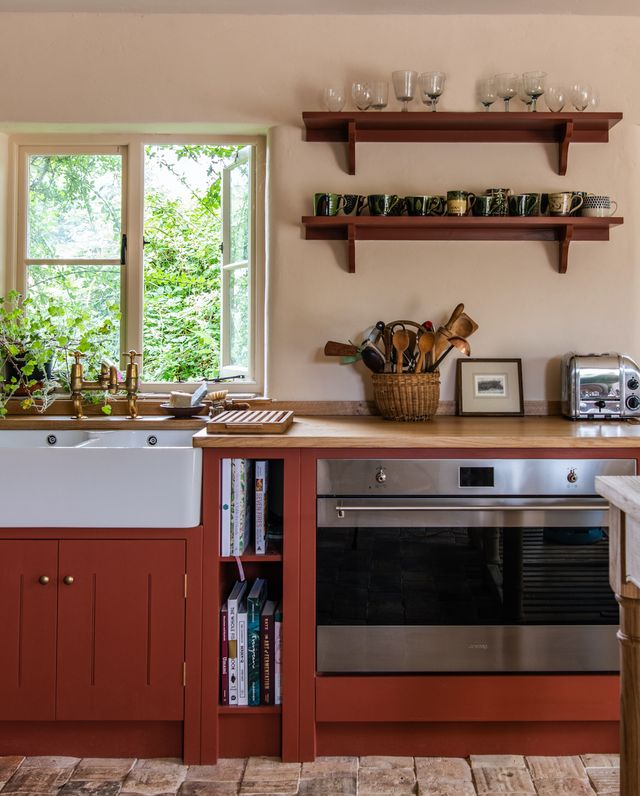
Uplifting dark kitchens
Red is a great choice to uplift pokey kitchens without much natural light. Combining red cabinetry with raw materials, like natural woods and stone, offsets any risk of your reds appearing too bright or garish.
Pictured: Bespoke kitchen at Plain English

Using wall space
In a small kitchen, there are plenty of ways to make the most of your wall space, from mounted hooks and floating shelves to tiered storage baskets that can be placed on surfaces and will keep odds and ends hidden away. This avocado-toned kitchen matches accessories to paintwork for a striking finished effect.

Hanging pots and pans
In a rustic, vintage, or country-style small kitchen, hanging pots and pans can make a striking feature and save space.
Pictured: Kitchen design by Martha Stewart

Glossy surfaces
Reflective, glossy tiles are a great way to brighten a small space, so too is quartz or a mirrored splashback. Metallic finishes will have the same effect, so opt for a silver finish on your larger appliances – this works brilliantly if you have a full-height double fridge – and balance with plenty of antiqued brass, copper and wood.
Pictured: Accesories at Tori Murphy

Coloured cabinets
If you're a fan of a feature wall or feature colour, but tentative about using too much eye-catching colour in a small space, go for a feature appliance instead or coloured cabinets. This will afford you a pop of colour without feeling overpowering.
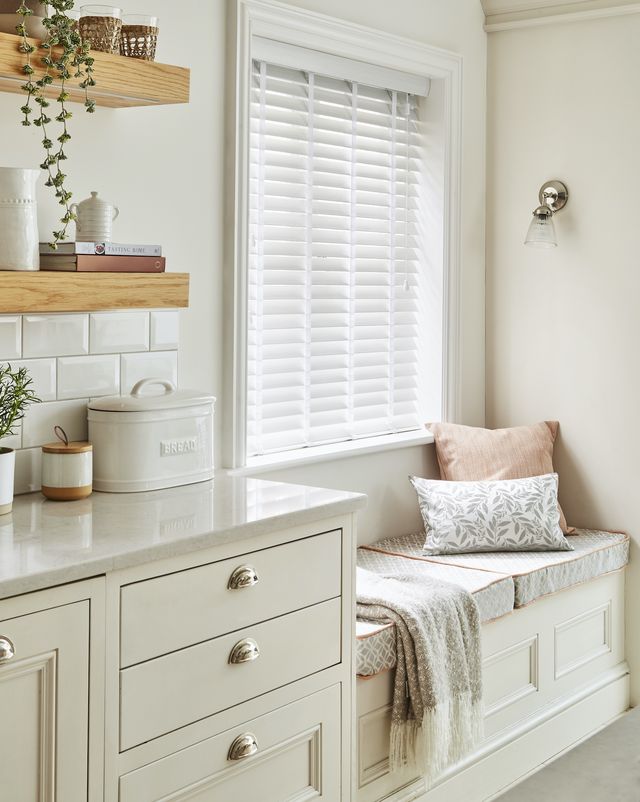
Window seating
One for truly compact kitchens – this sweet window seat adds an extra place to perch. Integrated seating just needs a spare corner, and the joy here is that you can create extra storage underneath.

Layers
The more layers you can squeeze into a small space, the more inviting it will be. Stacks of plates overhead and little hooks for mugs free up countertops, while plants and chopping boards layered against the back wall add interest to surfaces.

Grouping
There is no avoiding clutter in some small kitchens, especially if you are a bit of a collector and tend to accrue recipe books, decorative plates, colourful glassware and so on. In these instances, it can be useful to group similar objects together to create little visual pockets – dotting ten copper pots around a kitchen might look like you've become totally carried away, but piling them all together in a corner looks a bit more intentional.
Read more: A case for clutter: Design tips for creating a busy and eclectic home

Using your surfaces
With a bit of imagination, any surface can be used for decoration. Spot the artwork propped up on the doorframe and the earthenware jugs hung on the ceiling.
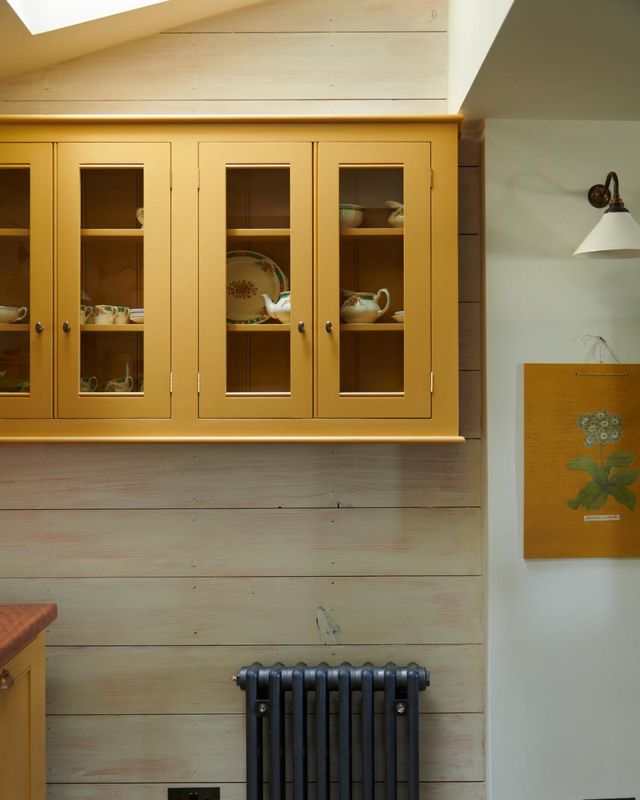
Overhead cabinets
In planning the layout of your overhead cabinets, it is a natural instinct to line them up with the work surfaces below, but that could rob you of some precious storage. This example extends them beyond the limits of the work surface into a space that would otherwise be unused or simply decorative.
Pictured: Bespoke kitchen at Plain English
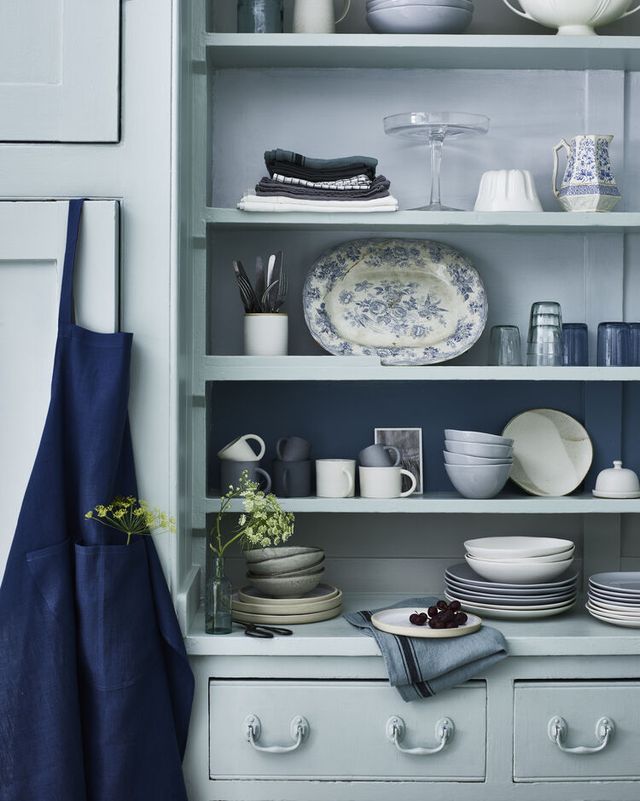
Colour drenching
Colour drenching is a design device that sees walls, borders and often ceilings and cabinets painted in a single colour. This is a bold statement in itself, but it has the added effect of blurring the boundaries of a room, so you're less likely to notice a low ceiling or pokey proportions.
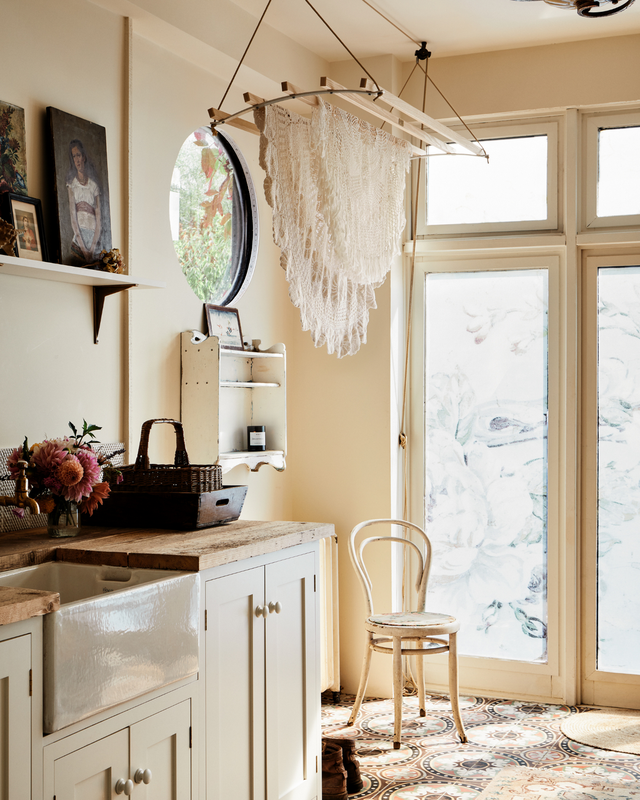
Space overhead
Ceiling drying racks are becoming hugely popular, and they are a great choice for smaller kitchen that can't afford to lose any floor space. We love this natural wood design that feels a touch vintage and country-inspired, rather than purely functional.
Pictured: Quinta Marron Tile at Bert & May

A stylist's trick
A tried-and-tested stylist's trick. Propping up chopping boards, framed artwork, recipe books and trays onto shelves or work surfaces will add a layer of decoration without taking up extra counter space.
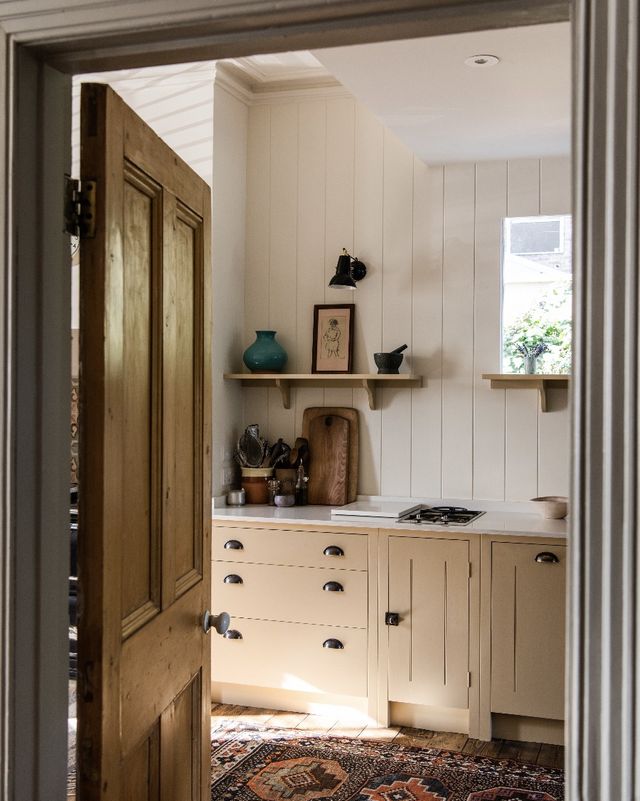
How to use surfaces
"Rather than filling the walls with units, opt for a full-height larder for those everyday items, allowing wall space for open shelving," says Tom. "Using reclaimed wood shelving adds character and contrast to your brand new kitchen. Use this area to let your personality show through by displaying your favourite glassware or ceramics.”
Pictured: Bespoke kitchen at Plain English
Lisa Joyner is the Deputy Daily Editor at House Beautiful UK and Country Living UK, where she's busy writing about home and interiors, gardening, dog breeds, pets, health and wellbeing, countryside news, small space inspiration, and the hottest properties on the market. Previously, she has written for Conde Nast Traveller, House & Garden and Marie Claire magazine. Lisa studied at University For The Creative Arts, where she completed a BA in Fashion Journalism.