

Are you wondering how to stop a dog from biting people? If your dog tries to bite someone, it's important to act quickly. From getting expert help to using a muzzle, there are plenty of effective ways you can stop a dog that nips or bites.
"There are many different reasons why a dog may bite, so it's important to first understand what may be behind this behaviour. Most adult dogs generally don't want to bite their people and will use various body language signals to communicate their discomfort and request space," Lindsay Arliss, Dog Behaviour and Training Specialist at Woodgreen Pets Charity, tells Country Living.
"Signs may include giving out a low growl, a dog's body posture becoming lowered or rigid, along with tucking their tail between their legs and licking their lips, repeatedly yawning and turning their head away."
Most dogs will engage in normal mouthing or play-nipping, but if you spot your dog aggressively biting others, it could be time to take further action. We speak to the experts to find out how to stop your dog from biting people. Here's everything you need to know...
1. Spot the signs early on
Even some of the most well-behaved dogs can occasionally bite people, so you must spot any signs of aggression or irritation early on.
"Any dog can act aggressively if they feel worried about something, so tackling dog bites relies on us all knowing how to safely interact with our dogs, and being able to spot the early warning signs that they are in distress before a situation escalates," a spokesperson from the Dogs Trust tells Country Living.
"Subtle changes in your dog's body language like their ears going back, tension in their body, or their tail tucked under are signals they are uncomfortable."


2. Provide chew toys
"Provide lots of suitable things for them to chew and wrestle – big toys are best. It's important not to shout at a puppy, or yelp when they bite you. Instead, redirect their mouth onto a toy," says Lindsay.
"Sometimes this can take a long time to teach, particularly if the dog has previously learned that it's entertaining to bite on people because they squeak. Just persevere – you'll get there in the end.
"Dogs will also bite if they feel threatened or frustrated. This can be related to breed type, with Terriers, guarding types and some herding breeds being quick to nip. Of course, all dogs can bite, so it’s important to respect their space and learn to read those signals!
Own a dog? You should read these too...


3. Consider using a muzzle
GoodBoy Gentle Muzzle Guard for Dogs - Prevents Biting and Unwanted Chewing Safely Secure Comfort Fit - Soft Neoprene Padding – No More Chafing –Included Training Guide Helps Build Bonds with Pet

GoodBoy Gentle Muzzle Guard for Dogs - Prevents Biting and Unwanted Chewing Safely Secure Comfort Fit - Soft Neoprene Padding – No More Chafing –Included Training Guide Helps Build Bonds with Pet
If you are worried about heading out on a walk with your dog, it could be worth considering a harness or muzzle — great for restraining your dog's ability to bite, chew and bark. While a muzzle should not be used in place of training, it will prevent your dog being able to bite (or eat things they shouldn't on a walk).
"If you're concerned about your dog in public always keep them on a lead and consider muzzling," add the Dogs Trust.
4. Pay close attention to your dog's behaviour
Paying close attention to your dog's behaviour will help you spot when things are leading to aggression. Whether it's being around another dog or feeling hungry, this will help you to control the situation better and know when to take things further.
If you can sense your dog getting more aggressive, always warn others. Don't allow your dog to approach others and always use a lead when heading outside.


5. Never leave them alone with children
If you have young children — or are visiting a friend who does — the Dogs Trust explain that you should never leave your dog alone with them. "No matter how well behaved your dog is, never leave them alone with your child, carefully monitor their interactions and intervene before worrying situations escalate," they tell us.
6. Head to your vet
If you notice your dog has started biting people more regularly, it's best to seek expert advice — they will be able to help you keep those aggressive tendencies under control.
"If you notice any changes in your dog's behaviour, it's worth visiting your vet who can check for any underlying causes and help with referring you to a qualified behaviourist," The Dogs Trust add.


7. Take part in training
A dog that bites is dangerous. Not just for people, but also for the dog, so it's best to take part in additional training.
"Dogs Trust's Dog School provides dog owners with access to fun, reward-based training. These classes help owners to read their dog's behaviour and to teach them skills that will enable them to settle in a home environment and cope with day-to-day events. If we can support people so they notice some of the more subtle ways dogs communicate with us, this all contributes to a better bond and fewer behavioural issues."
24 indestructible dog toys for aggressive chewers
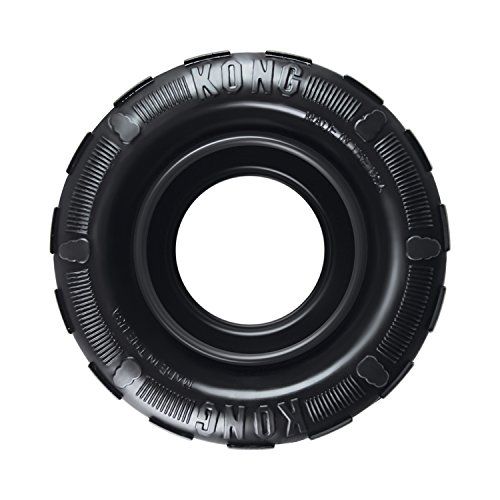
KONG Tires Durable Rubber Chew Toy and Treat Dispenser for Power Chewers
This tyre-shaped chew toy has been made from durable rubber, so it's perfect for determined chewers. It also gives owners the chance to fill the inside with tasty treats, too. Available in two sizes for you to choose the best for your breed.
READ MORE: 6 dog games great for training and bonding
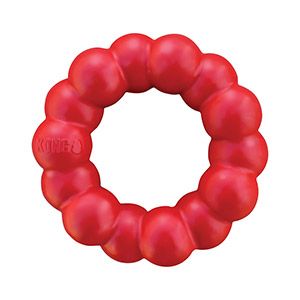
Built for durability, this bright red dog toy will offer your four-legged friend mental and physical stimulation. Starting from £9, it's a real steal buy.

Made from hemp and recycled cotton, this rope ring's tough fibres work to clean your pup's teeth while also being a whole lot of fun to play with.

Soft yet durable, this cute grey bear has minimal stuffing and an internal knotted rope skeleton.

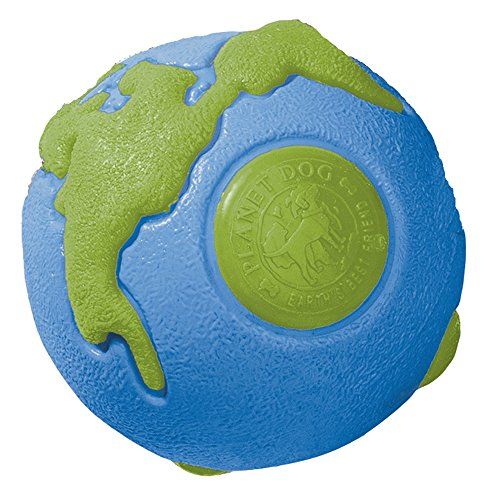
One of the toughest dog balls on the market, this sweet 'planet' design has been made with award-winning Orbee Tuff material. Certain to provide hours of fun...

Ideal for dogs who love to swim, this floating fabric toy has a handle and is designed with abrasion-resistant materials for increased durability. Make sure not to forget it on your next beach trip.
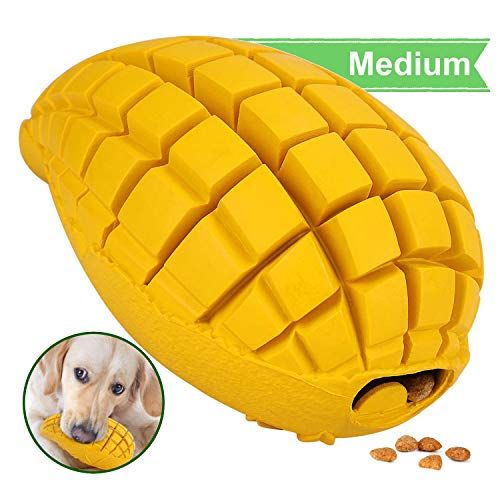
This durable rubber mango toy — which can be filled with dog treats — is sure to provide hours of chewing fun. Perfect for small and medium dog breeds.

Keep your dog entertained for hours with this purse-friendly squeaky toy shaped like a carrot. Plus, we love that you can pick this up at the supermarket as you do your weekly food shop or even have it delivered with your groceries.
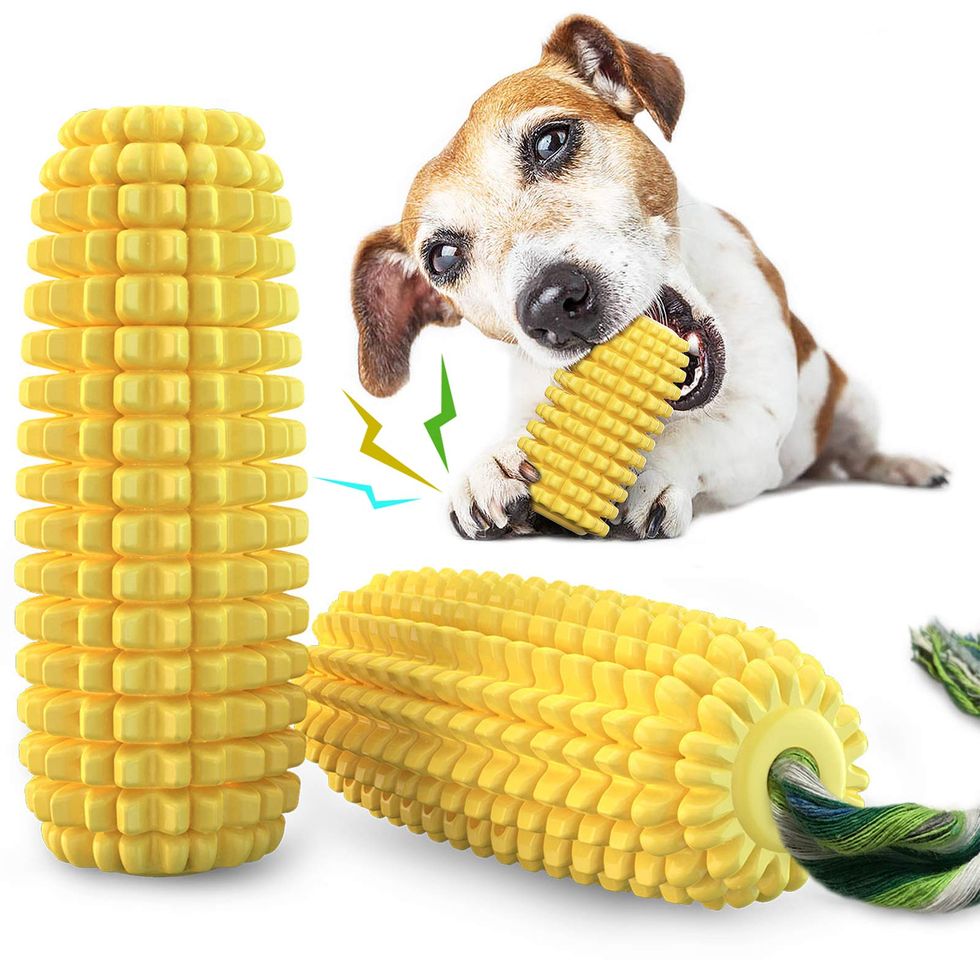
Give your dog one of their five a day with this sweetcorn chew toy. It has been designed especially for aggressive chewers and is suitable to small, medium, and large dogs in any breeds. We think dogs will love its small sound function.

If your pup is a fiend for peanut butter, you might want to introduce this peanut butter flavour chew toy into their playtime routine. The T-shape allows them to grip it easily with their paws while the raised nubs on it can help keep their teeth clean.

If they prefer the taste of bacon, why not try this double-bend bone toy. It's available in a range of sizes to ensure that your dog doesn't miss out on this tasty treat.

Let the fun commence with this long-lasting squeaker football dog toy. Perfect for keeping your dog entertained in the garden.
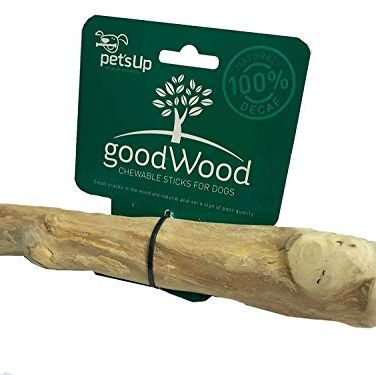
This durable wooden stick is great for dogs who love to chew regularly. While keeping your dog occupied for hours, it's also great for their dental hygiene.

Built to last, this fun donut dog toy has been made from high-quality material and will not wear down dogs' teeth.
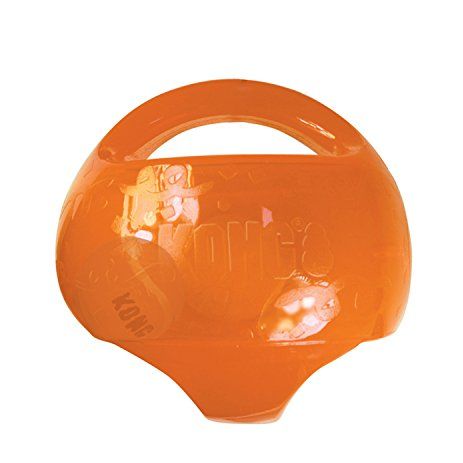
This bright fetch toy is ideal for interactive fun. It has a squeaker and a practical handle for throwing at your pup. We're certain they'll love this!

Made from three strands of heavy duty tightly woven rope, this traditional rope toy is perfect for medium or larger breeds and can withstand some serious pulling and tugging.
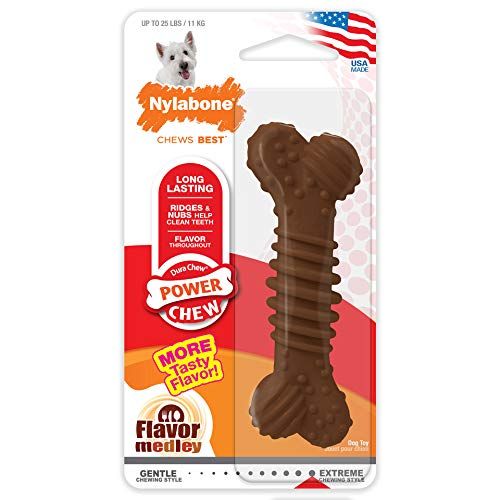
This chew toy encourages healthy, non-destructive chewing habits with dogs. And it also has a tasty flavour to it too.
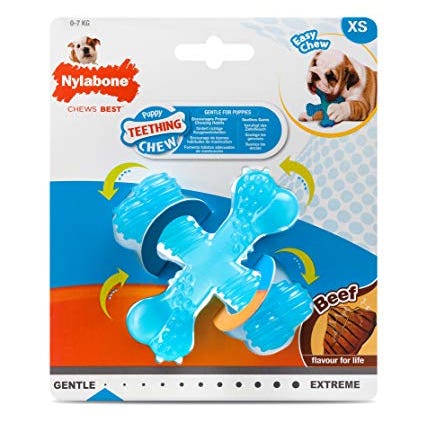
Great for young puppies, this gentle bone will help teething pups who have not yet formed any adult teeth.

We love this unique toy, which is great for chew sessions and endless fun. Top tip: fill with peanut butter to extend playtime and satisfy chewing instincts.
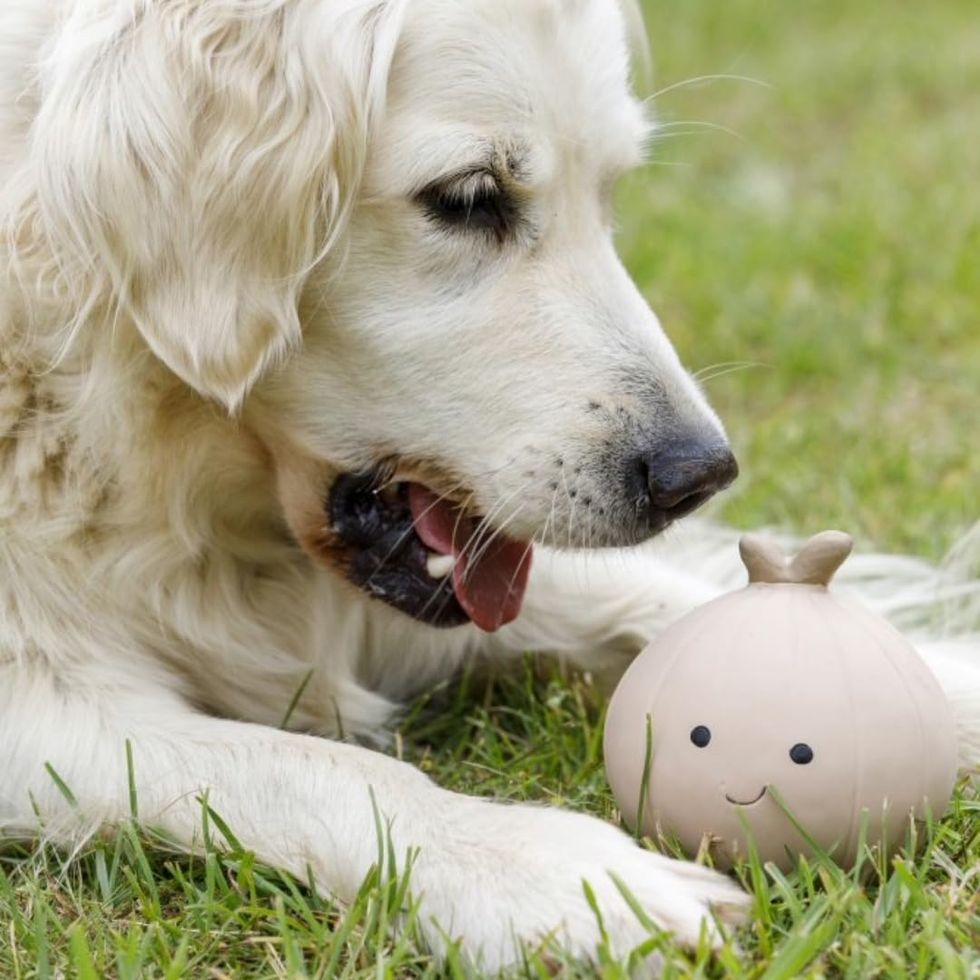
In a blush pink, this large onion toy is surprisingly durable. Best of all, it's currently on sale for less than £3.50.

Another great option if your dog loves to play fetch, this durable fetch stick toy not only makes it easier for them to spot where their stick has landed when you're out on a walk or a trip to the park. But it also works for all dogs of all sizes.
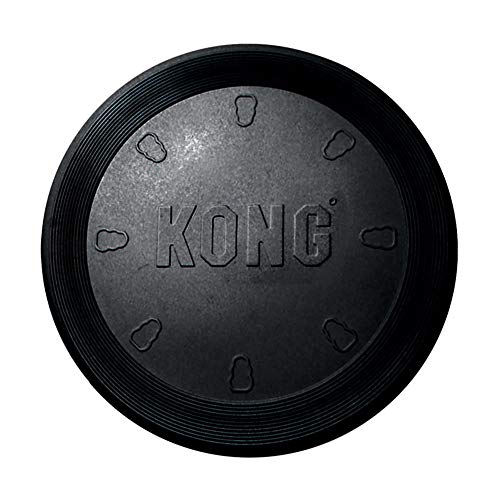
Looking for a durable rubber frisbee? Well, look no further, as this red style from KONG is perfect for keeping your four-legged friends fit and healthy.

Another great frisbee option is this XL one. It might even be easier for your four legged friend to grip and it's also currently on sale.

Arm & Hammer Arm & Hammer Super Treadz Gorilla Toy for Dogs green
Made by Arm & Hammer, this gorilla-shaped toy is infused with baking soda to safely help with bad breath. Add in the fact that it is extremely durable and has a built-in treats dispenser and we can see why so many shoppers have given it five-star reviews.
Lisa Joyner is the Deputy Daily Editor at House Beautiful UK and Country Living UK, where she's busy writing about home and interiors, gardening, dog breeds, pets, health and wellbeing, countryside news, small space inspiration, and the hottest properties on the market. Previously, she has written for Conde Nast Traveller, House & Garden and Marie Claire magazine. Lisa studied at University For The Creative Arts, where she completed a BA in Fashion Journalism.


