
Colour drenching has had a grip on the interior design world for a number of years, and as brilliant as it is, it takes courage to paint a room from top to bottom in a truly bold colour – and even more to live immersed in it every day. It is little wonder that so many of us retreat into the comfort and predictability of off-white.
But there is a happy middle ground to be had, a solution that requires neither more boldness nor less, just better placement.
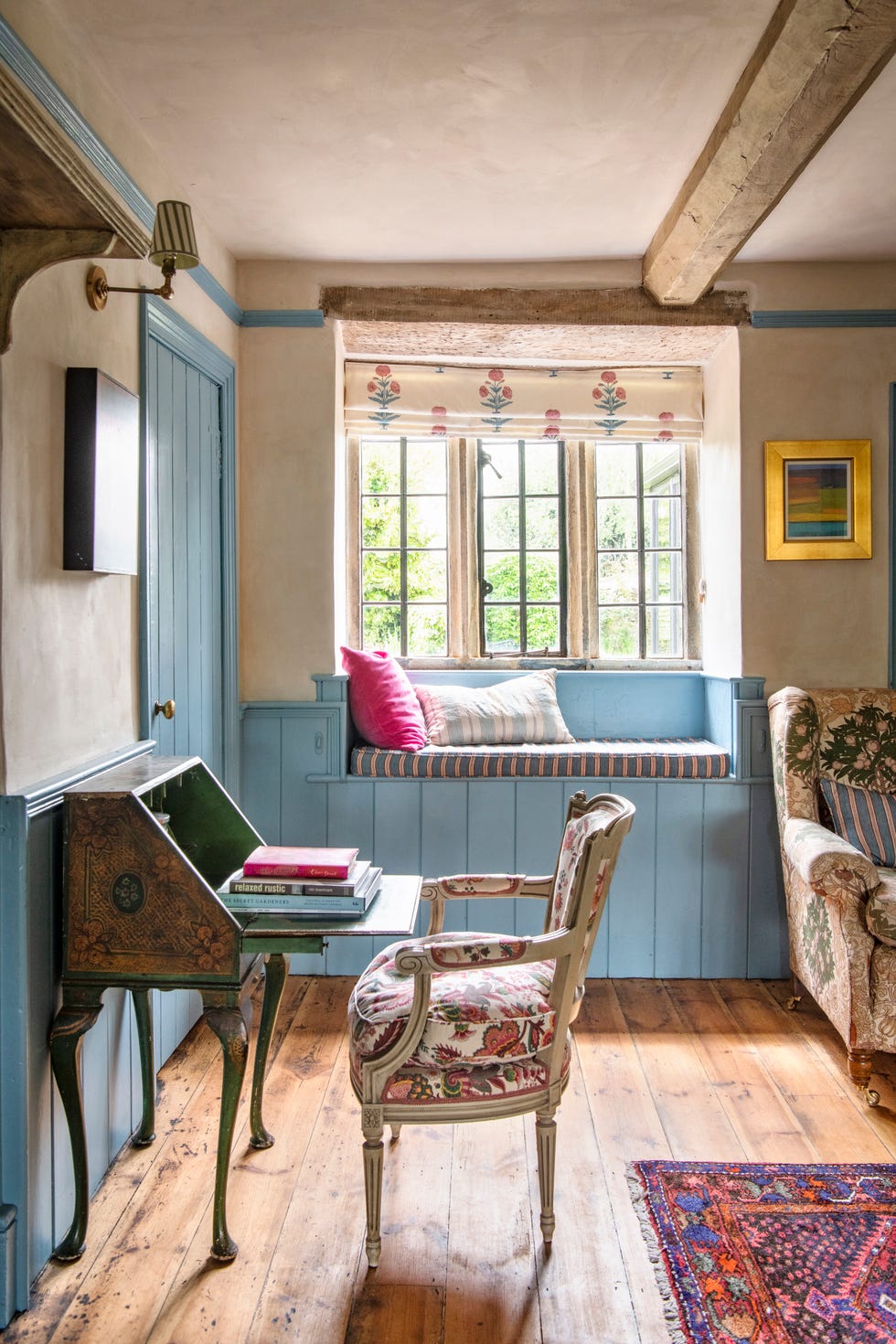
Half-drenching – running your colour up to dado height and leaving the rest of the wall plain – is a study in restraint applied in service of generosity. It allows you to bring unapologetic colour into a room without the overwhelming commitment of painting the whole thing.
What is the half-drenched wall?
The technique is gloriously simple – paint the lower half of a wall in a rich, characterful colour while leaving the upper portion plain to preserve a sense of openness. The room has its drama and lightness simultaneously.
There is also a thoroughly pragmatic argument for the half-drench. The lower half of any wall takes the most punishment from scuffs and scrapes, so painting it in a durable eggshell in a forgiving bright makes maintenance infinitely more manageable.


How to choose the right paint colour for half-drenched walls
The half-drench permits you to be far bolder with your colour choice than you might otherwise dare. Shades that might feel relentless on all four walls become entirely livable – joyful! – when contained to the lower half.
What to Read Next
The key is to use a colour with genuine conviction. This is not the place for wishy-washy mauves or tentative greens. The half-drench works precisely because it concentrates colour rather than diluting it.
The neutral on your upper walls should be chosen with care, with particular attention paid to its temperature – a cool-toned colour below will fight with a warm-toned neutral above, so be sure to choose a suitable match.
A brilliant true white can be paired with anything, but because of the contrast, it will compound the intensity of the colour below – which is neither good nor bad, just a matter of taste.
Panelling is your best friend


One of the reasons this technique has flourished in country interiors specifically is that it aligns so naturally with architectural features already present. Tongue-and-groove panelling – long a staple of the farmhouse bathroom and the cottage kitchen – provides a ready-made framework for the half-drench.
When you encounter a doorframe, the instinct might be to continue the colour across it, cutting it cleanly in half as if it isn't there. That can read as a little too graphic – something we might have done in the early 2000s.
The more satisfying approach is to let the colour follow the architecture, painting the joinery with it, as interior designer Sarah Southwell has done in her Sussex home.

Rachel Edwards is the Style & Interiors Editor for Country Living and House Beautiful, covering all things design and decoration, with a special interest in small space inspiration, vintage and antique shopping, and anything colour related. Her work has been extensively translated by Elle Japan and Elle Decor Spain. Rachel has spent over a decade in the furniture and homeware industry as a writer, FF&E designer, and for many years as Marketing Manager at cult design retailer, Skandium. She has a BA in French and Italian from Royal Holloway and an MA in Jounalism from Kingston University. Follow Rachel on Instagram @rachelaed


