
Spring is in the air and with it comes nesting season. In the UK, birds start building their little houses from March onwards, making now an opportune moment to install a bird box in your garden.
British birds naturally choose sheltered spots high up in treetops and under roofs or in the secure embrace of dense shrubbery. Bird boxes, if positioned well, are also an attractive choice, being almost impenetrable to predators like cats and squirrels thanks to their little entrance holes.
But not all birds gravitate towards the same kind of home. If you're hoping to attract specific birds to your space, it's important to pick the right nest box.
"The wrong entrance size or nest box style can completely deter the species you’re hoping to attract," says Sean McMenemy, founder of Ark Wildlife, an independent specialist for high-quality bird food, wildlife feed and habitat products to support garden biodiversity.
Types of bird boxes tailored to species


The size of the hole as well as the distance from the ground largely determine which birds are likely to nest in the boxes you install in your garden. Sean breaks it down for us by bird.
- Blue tits like a snug entrance, with a hole of around 25 to 26mm, positioned two to four metres high.
- Great tits need a slightly larger hole of 28 to 32mm, ideally four to six metres high.
- House sparrows are communal nesters and favour boxes under the eaves with 32 to 34mm holes, often grouped together.
- Starlings also prefer eaves but require a much larger entrance hole of 45mm.
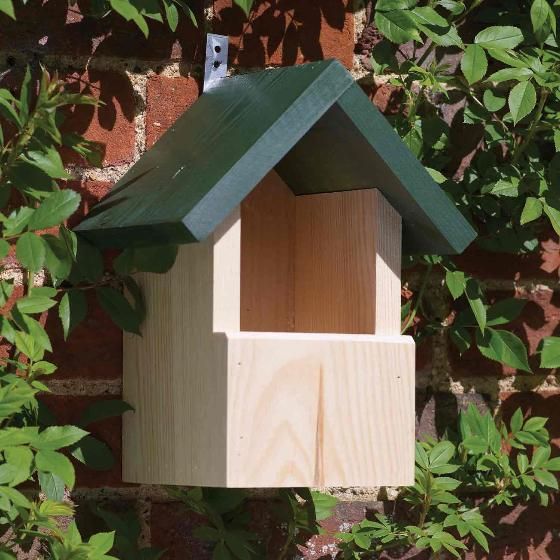
- Robins prefer open-fronted boxes, low to the ground (around 1 metre), tucked into cover
- Blackbirds like open visibility at the front and sides, usually 1 to 2 metres high in a quiet spot.
- Treecreepers won’t go anywhere near smooth timber boxes. Instead, they gravitate towards bark-textured surfaces that feel natural under their feet.
How to choose and install a bird box correctly


The other factor determining whether a bird box will come alive with tiny chirps or not depends on its location. Birds need protection and won't choose a spot that doesn't feel safe. For the best chance of attracting birds to your box, Sean advises to:
- Pick a shaded, sheltered spot out of the direct midday or afternoon sun
- Face the box north to north-east
- Tilt it slightly forward so rain runs away from the entrance
- Leave a clear flight path
- Position near a tree or shrub where parents can pause and check for predators
- Keep feeding birds and providing fresh water nearby
When it comes to choosing a bird box, avoid those with a perch, which helps predators more than its inhabitants. Also, steer clear of 'designer' boxes. "Colourful novelty nest boxes shaped like beach huts or phone boxes may look charming to us, but many are poorly insulated and too shallow to protect chicks from predators," Sean says.
A good nest box should have thick, insulated walls, a deep chamber out of reach of a woodpecker's peak and a cat's paws, and a waterproof roof. "In a mild year, almost anything might work, but in a cold, wet spring, poor design can prove fatal," he warns.
What to know


Finally, here are a few pearls of bird box wisdom that will help you support wildlife confidently this year.
You can hang a bird box in every second tree. "Contrary to common belief, you don’t need huge spacing in gardens," says Sean. If there's enough food and water available, different pairs will happily breed near each other.
You should clean bird boxes once a year. Do this after the brooding season. A clean box will attract new birds. "Remember, the goal isn’t just occupancy – it's successful fledging," says the wildlife expert.
Disturbing nesting birds is illegal. Nesting birds are protected under the Wildlife and Countryside Act 1981, which states that it is illegal, among other things, to intentionally damage, destroy or obstruct access to their nests while they are in use or being built.
So resist the urge to peek inside an active box, no matter how tempting; otherwise, birds may abandon their nest and young.
Instead, observe nature's spectacle from a respectful distance – and take quiet satisfaction in the role you've played. "When young birds take their first flight from a nest box you provided, you’re not just watching wildlife," says Sean. "You’re helping shape it."
bird box gallery
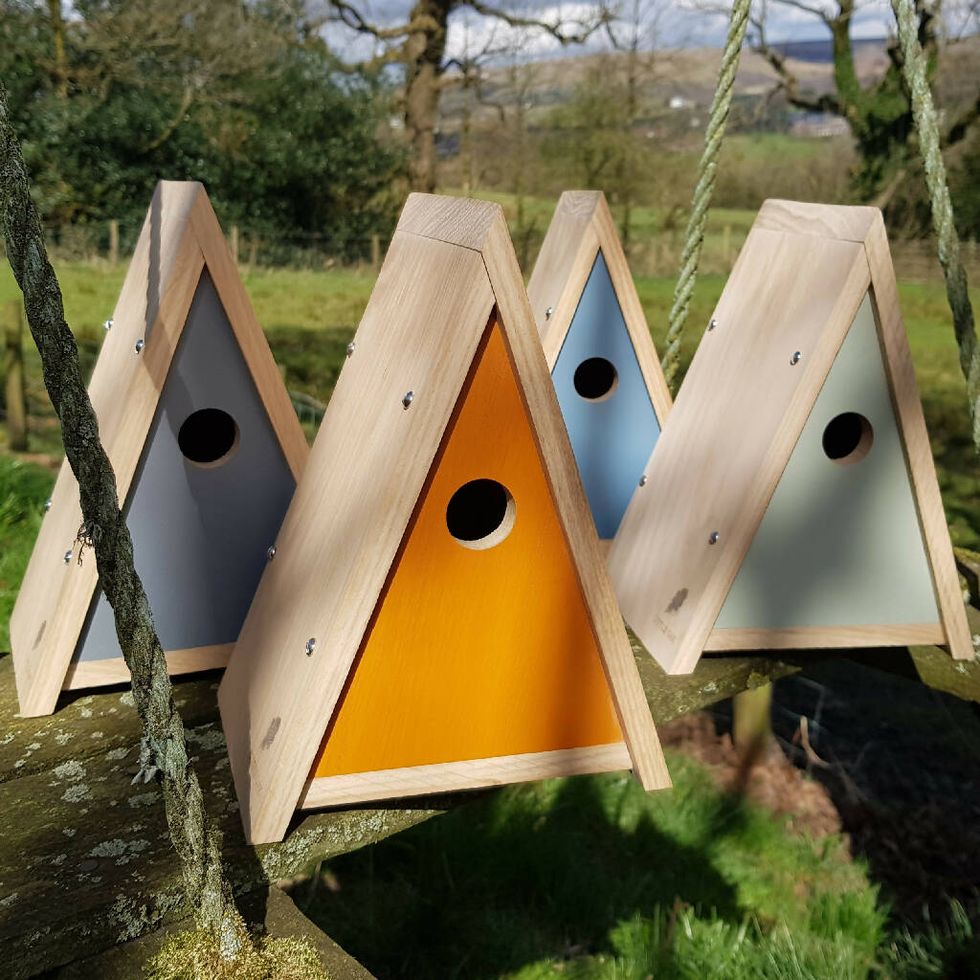

Smart Bird Box
Wanda Sachs is the Multiplatform Writer for Country Living and House Beautiful, exploring the latest in gardening, wildlife and sustainable living alongside interiors and property. She is particularly interested in human-interest stories, the intersection of design and pop culture, and the evolving relationship between urban and rural life. Previously, she served as Associate Editor at The Berliner in Berlin, where she reported on culture and fashion. Wanda studied English and German at the Goethe University Frankfurt and Exeter University.


